
One employee quickly prepares a report with AI. Another produces a different answer to the same question. A manager cannot tell which sources were used, which version was approved or who should act next.
Individual output has accelerated, but the shared operating model has not kept up. Atlassian's AMP approach addresses that gap: how should people and AI agents work on the same tasks?
Agentic Multiplayer Protocol is Atlassian's name for the experiences, technologies and patterns that shape human-agent collaboration. The word “protocol” does not make it a standalone application or an independent open connection standard like MCP.
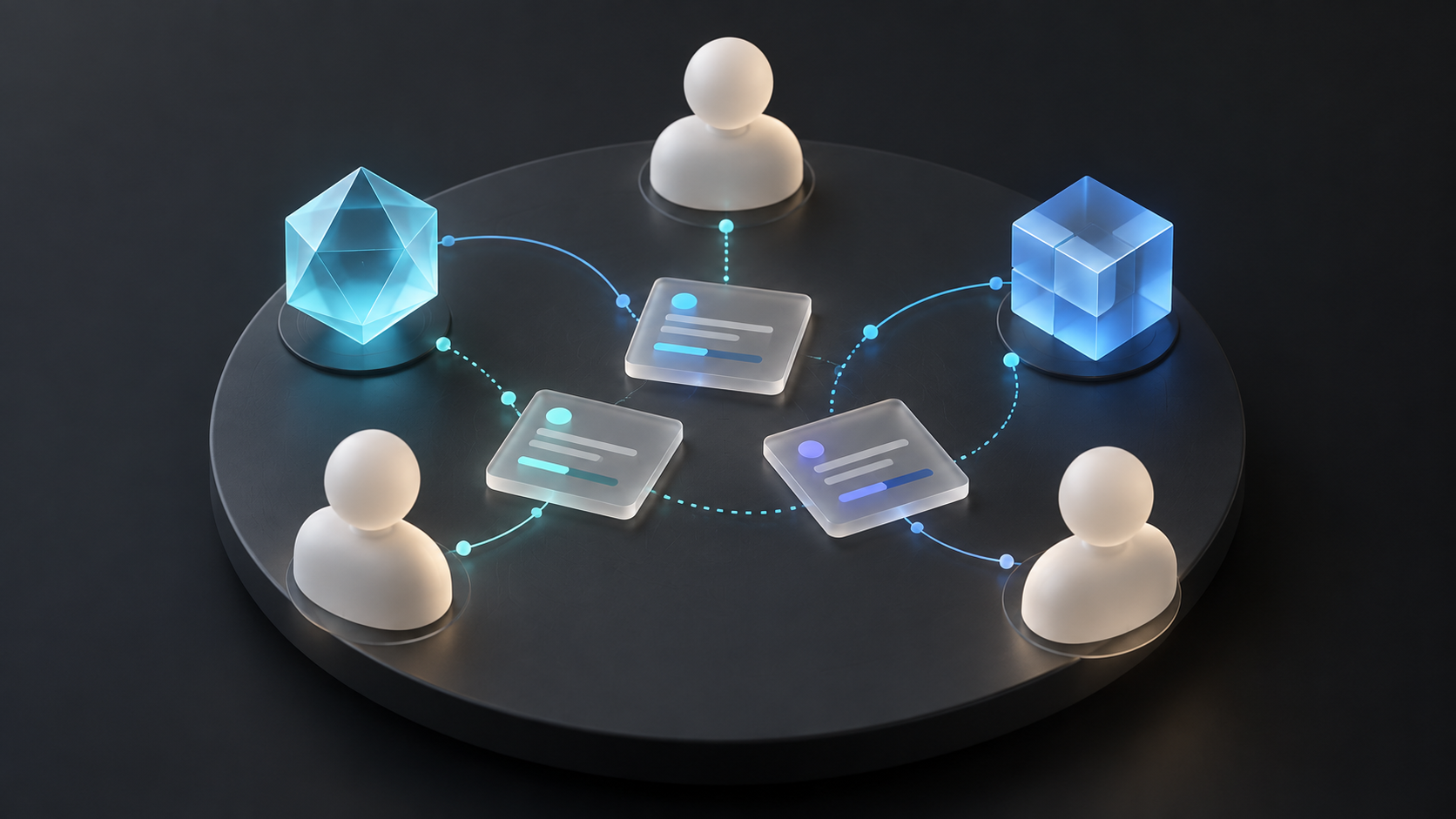
The multiplayer idea is that AI work should participate in the team's shared workflow rather than remain in a private chat. Ownership, context and reviewable results need to be visible.
MCP focuses on tool connections; Teamwork Graph focuses on organisational context. AMP places these capabilities within a broader model for people and agents working together.
Atlassian describes three areas: real-time and asynchronous collaboration; identity and shared presence; context and governance. The question is therefore not only “Can the agent do this?” but “Within which boundaries, and who is accountable?”
In a hypothetical design, a meeting recording is used to prepare draft actions. A person checks whether each item reflects a confirmed decision or merely a suggestion raised in discussion.
Approved actions are moved into the appropriate work records. Every task has a human owner; an agent may handle preparation or follow-up. Critical changes require a pause for approval. This illustrates an operating model, not a claim that every part is available to every customer today.
Define five things: its assignment, the sources it can access, the actions it may perform, the human checkpoints and the person who intervenes when something goes wrong.
Measure unowned actions, follow-up effort and incorrect operations rather than the number of agents deployed. Where ownership is unclear, automation can amplify uncertainty.
Availability varies across AMP experiences. Before a pilot, check the relevant product, plan, supported agent and rollout status. Do not include anticipated features in today's delivery commitment.
At Ponsatlas, we recommend designing human judgment, agent assignments and the shared system of record together. The aim is not to deploy more agents. It is to turn decisions into action with clear control and accountability.